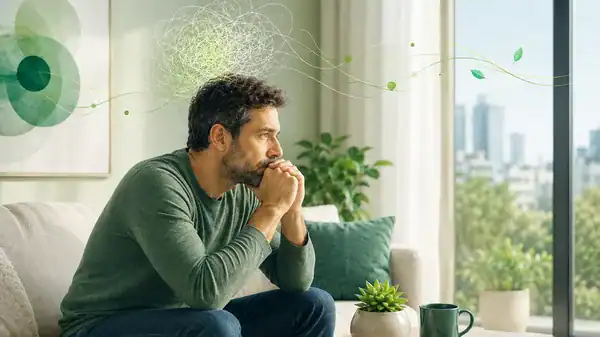

Fear, panic and anxiety are natural experiences that can happen to any of us from time to time. But when anxiety lasts for a long time, gets in the way of daily life and harms your quality of life, it is worth treating. In this professional article, we explain what anxiety is and what its symptoms are, the types of anxiety disorders, what actually happens in the brain during anxiety, how to cope with it, and how anxiety can be treated (with medical and non-medical treatment)
What Is Anxiety?
Anxiety is defined as an emotion that surfaces when a person fears what is coming in a way that is excessive, uncontrollable and unwarranted. In other words, the anxiety the person feels does not match reality or the actual level of risk. People who suffer from anxiety essentially feel threatened when there is no real need to.
Anxiety disorder is the most common of all mental health conditions and is highly prevalent in the Western world. A person can experience anxiety anywhere, even in familiar surroundings and while doing something routine. Anxiety symptoms can strike in response to a specific trigger or with no trigger at all.
When Does Anxiety Become an Anxiety Disorder?
For anxiety to be considered a disorder, it has to be abnormal. For example, a parent whose child is in Gaza will understandably be anxious, and this is most likely not an ongoing mental disorder. In addition, symptoms must persist for a certain period before anxiety can be diagnosed clinically. For example, if someone experiences trauma and has symptoms about two weeks later, that is a reasonable timeframe. But if they are still suffering from symptoms five months later, they may have PTSD, since this is a persistent problem that needs to be treated.
Anxiety disorder has prominent symptoms, such as anxiety attacks, difficulty concentrating, hyperarousal, heavy breathing, numbness, heightened and irrational fears, and it can lead to reduced functioning.
The bottom line: if anxiety is lowering a person’s quality of life, it is time to treat it!
What Are the Symptoms of Anxiety Disorder, and Can They Be Recognized?
- Emotional symptoms: People with anxiety disorder describe feelings of fear, dread, restlessness, poor concentration and confusion, alarm, and unpleasant thoughts of “going crazy.”
- Cognitive symptoms: Difficulty making decisions, trouble concentrating, low attention.
- Behavioral symptoms: Avoiding situations that trigger anxiety, social isolation, a tendency to worry excessively.
- Physical symptoms: Nausea, dry mouth, a racing heart, muscle tension, dizziness, sweating and trembling.
Types of Anxiety Disorders:
- Generalized anxiety disorder (Generalized Anxiety Disorder – GAD): The most common type. Most people with generalized anxiety disorder are entirely ordinary people, but they experience anxiety attacks, sleep problems, depression and other symptoms.
- Obsessive-compulsive disorder (OCD – Obsessive Compulsive Disorder): A severe disorder in which the way of coping with anxiety takes the form of intrusive thoughts and compulsive rituals.
- Panic disorder – Panic Disorder: Usually characterized by a person who had one anxiety attack and, from that moment on, lives in constant fear of the next attack, which paradoxically causes the attacks to keep recurring over time
- Post-traumatic stress disorder – PTSD Posttraumatic Stress Disorder: A psychiatric disorder that causes those who suffer from it to experience fear, anxiety, helplessness, heightened arousal, sleeplessness and intrusive memories of the traumatic event or events they were exposed to.
- Social anxiety: An intense fear of social situations, driven by a fear of humiliation or embarrassment. People with social anxiety may avoid a wide range of social activities, which can significantly impair their social, interpersonal and occupational functioning.
- Specific anxiety (phobia): An excessive fear of a specific object or situation, such as animals, enclosed spaces, flying, elevators, exams and more. Encountering the source of the fear leads to an intense fear response and a determined effort to avoid it.
What Happens in the Brain During Anxiety?
Anxiety affects the nervous system and brain activity. There is a certain change in how we react and in our ability to analyze situations. We know that anxiety develops in the limbic system, a complex network involved in, among other things, hormone release and involuntary responses.
During anxiety, the feeling of anxiety arises first and cannot be regulated, and the physical symptoms follow from there.
One of the clearest features shared by all anxiety disorders is the “fight or flight” response.
Fight or Flight
The “fight or flight” response is a basic evolutionary survival mechanism we developed to deal with immediate danger and survive. When we feel threatened, our body goes through rapid physiological changes that prepare us for action. The heart beats faster, breathing speeds up, the muscles tense and the brain focuses on the danger. These are automatic responses meant to give us the energy and strength we need to fight the threat or escape from it.
But the “fight or flight” response is not only about physical action. It also affects our thoughts and emotions. We may experience fear, anxiety, anger or confusion. Under stress, our ability to think rationally can be impaired, and our reactions may become impulsive.
Although this mechanism is essential for survival, when the system reacts out of proportion to reality and we are exposed to stress for long periods, it can lead to physical and mental health problems. The “fight or flight” response is designed for short-term situations, but when it is activated chronically, it can seriously harm our physical and mental health.
SGB treatment offers new hope for survivors of sexual trauma, allowing them to begin a process of recovery and to cope with the trauma in an effective, focused way.

Anxiety Treatment: How Can Anxiety Disorder Be Treated?
Today, in 2026, there is a wide range of treatments for anxiety disorders:
- Psychological therapy: Psychological treatments such as CBT focus on changing patterns of thinking and behavior, while psychodynamic therapies explore the roots of anxiety in the past and its effects.
- Medication: Pharmacology offers several options that reduce anxiety; medications such as antidepressants and beta blockers provide symptom relief by acting on neurotransmitters in the brain.
- Exposure therapy: Prolonged exposure therapy:
Exposure therapy for anxiety disorder is a treatment in which the person with anxiety is exposed to the source that “drives” their anxiety. The method is mainly intended for people with PTSD, who are exposed to the source of the trauma gradually and in a measured way, while paying close attention to how they respond. This treatment is relevant to all types of anxiety and allows us to address the root of the fear while carefully monitoring the person. - Self-soothing techniques: There are many techniques that a person with anxiety can use in everyday life to produce a calming effect.
Mindfulness, yoga, meditation and guided imagery. These techniques can improve the daily functioning of people with anxiety, and all of them involve some element of looking inward. - SGB treatment: At Stella Israel, we offer a unique treatment: a short medical procedure involving two injections of local anesthetic in the neck, intended to recalibrate and retrain the fight-or-flight system, which is functioning in a maladaptive way, and thereby treat the symptoms of PTSD and anxiety.
Don’t hesitate to reach out to a qualified professional and take the first step toward recovery.
We at Stella Israel are here for you with any question