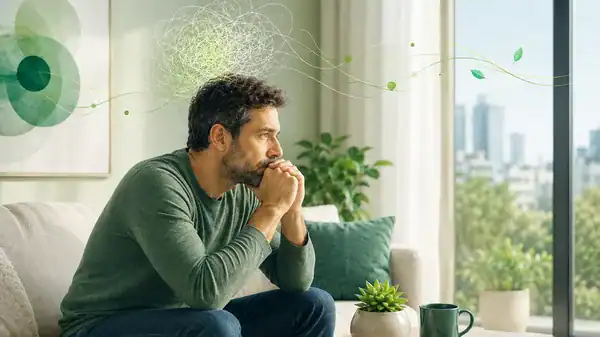

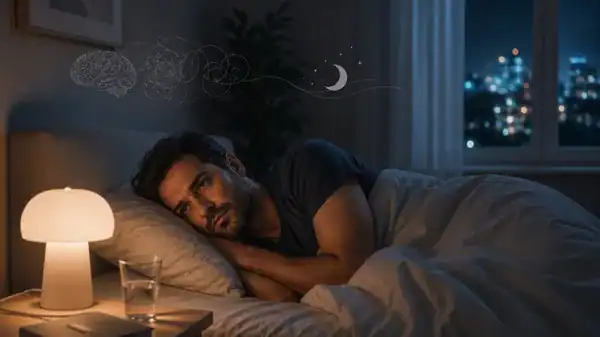
You managed to hold it together all day. Work, conversations, kids, messages. Then evening comes: the house is quiet, you get into bed, turn off the light and finally try to rest.
But that’s exactly when something shifts. Your thoughts start racing, your heart beats faster, and every small sensation in your body suddenly feels significant. Sleep doesn’t come, or it’s interrupted again and again in the middle of the night.
If these feelings sound familiar, it’s important to know that you are truly not alone.
Many people living with anxiety say their hardest hours are the evening and nighttime. It isn’t always a real worsening; sometimes the quiet and the lack of distractions simply make the anxiety more noticeable.
When Everything Goes Quiet, the Mind Gets Busy
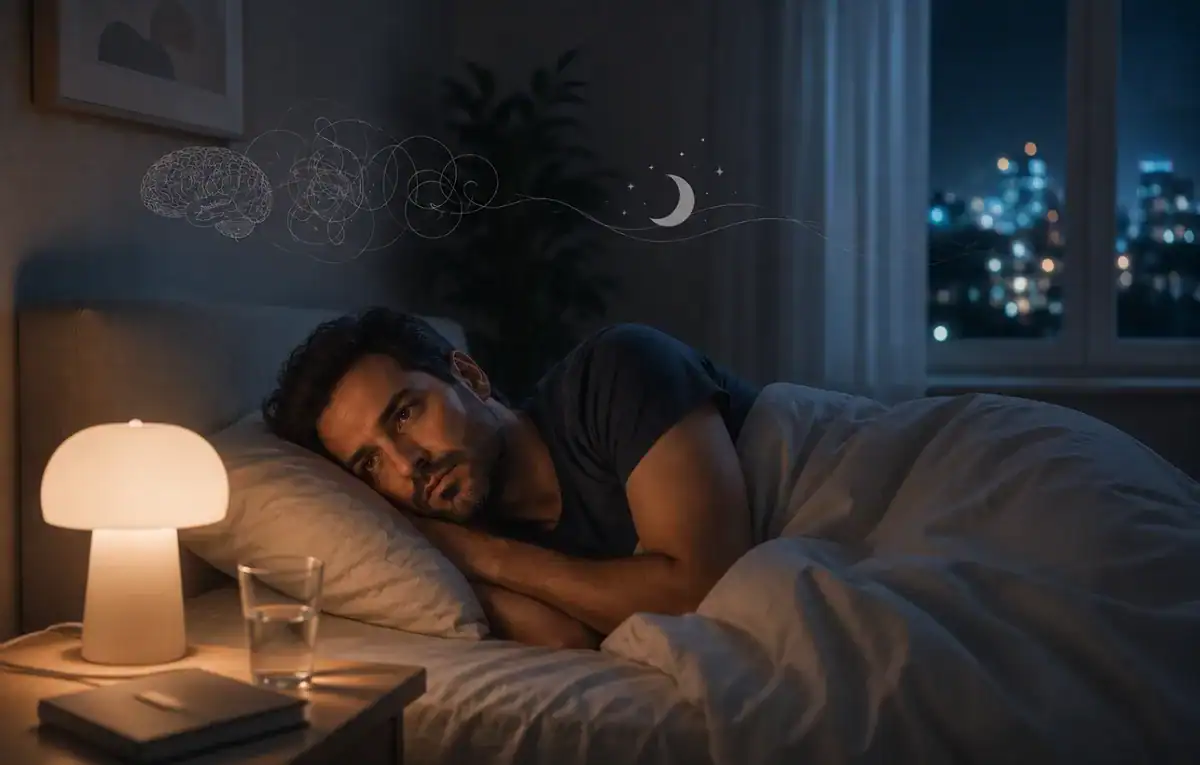
During the day, the brain takes in countless distracting stimuli: work, commuting, conversations, family. At night, when there are no meetings, phone calls or urgent tasks, space opens up, and thoughts surface with greater intensity.
Some people replay conversations from the day before, while others think about their health, their children, work or the future – sometimes the same thoughts over and over, even when they know there’s no real basis for them. This isn’t weakness; it’s a process that people living with anxiety know well.
Why Do You Feel Every Heartbeat in Bed?
One of the most common complaints is a heightened awareness of the body. Suddenly you can hear your heartbeat. You feel every breath. Every little bit of muscle tension gets your attention.
When we are in a quiet environment with no distractions, the brain turns more of its attention to what’s happening inside the body. For people living with anxiety, ordinary bodily sensations can be interpreted as a sign that something is wrong, and that interpretation heightens the sense of stress even further.
This creates a cycle in which anxiety amplifies physical sensations, and physical sensations amplify anxiety.

"I'm Exhausted, but I Can't Fall Asleep"
This is one of the most frustrating feelings. Your body is exhausted. Your eyes are closing. But your mind simply refuses to calm down.
Some people experience nonstop thoughts. Others feel on high alert, as if their body is still waiting for something that hasn’t happened yet. Some worry that if they fall asleep, they’ll wake up with another anxiety attack.
When the nervous system is in a state of high arousal, the shift into a state of calm and sleep can be harder.
Why Do Some of Us Wake Up in the Middle of the Night with Anxiety?
Some people have no trouble falling asleep, but wake up at two, three or four in the morning with a racing heart, a choking sensation or troubling thoughts.
This experience can be very frightening, especially when it keeps happening. Sometimes waking up comes with a feeling that something terrible is about to happen, even though there is no real danger.
It’s important to know that this, too, is familiar among people living with anxiety, and it doesn’t necessarily mean their condition is getting worse.
Can This Cycle Be Broken?
The good news is yes.
The first step is understanding that what you’re feeling isn’t rare, and that there’s an explanation for it. Simply understanding that the body isn’t “breaking down” but responding in a particular way to anxiety can, for some people, reduce the sense of uncertainty.
When symptoms persist over time or affect quality of life, it’s important to seek a professional evaluation. Today there are a variety of treatment approaches, and the choice between them depends on the patient’s characteristics, the severity of the symptoms and the recommendations of professionals.
It’s also important to know that not every sleep difficulty is caused by anxiety. Other factors can disrupt sleep and cause similar sensations, so they should be looked into as part of a professional evaluation: heavy caffeine intake, certain medications, sleep apnea, pain, reflux or hormonal changes.
What Can You Do Tonight?
Along with understanding, there are a few simple steps that can make it easier to fall asleep, starting tonight:
Cut back on screens and news before bed – Scrolling through the news and social media fuels a sense of alertness. It’s best to stop about an hour before bed and choose a calmer activity.
Keep a regular bedtime – Going to sleep and waking up at consistent times supports your internal clock and gradually makes it easier to fall asleep.
Don’t stay in bed if you can’t sleep – If about 20 minutes have passed and sleep isn’t coming, it’s better to get up, go to another room and do something relaxing in dim light, and return to bed only when you feel sleepy.
Practice slow breathing – A few minutes of slow, deep breathing, for example inhaling for a count of four and exhaling slowly for six, can help your body shift into a calmer state.
Reduce caffeine – Coffee, tea, cola and energy drinks affect the body for many hours after you consume them. It’s a good idea to avoid them from the afternoon on.
Treating Anxiety Isn't Only About Thoughts
For many years, most anxiety treatments focused mainly on the emotional and cognitive aspects of the condition. Today we know that in some people, the nervous system itself is in a state of hyperarousal, so in certain cases, treatment approaches aimed at helping regulate the body’s stress response are also considered.
At Stella Center Israel, we carry out a comprehensive professional evaluation of every patient, with the understanding that there is no one-size-fits-all solution.
Alongside conventional treatment approaches, the center offers SGB (Stellate Ganglion Block) treatment – a short medical procedure performed by a specialist physician under ultrasound guidance.
The goal of the treatment is to help regulate overactivity of the sympathetic nervous system, which in some people living with anxiety may remain in a state of constant alertness even when there is no real danger.
Sometimes the First Step Toward Better Sleep Begins with Understanding
If you feel that your nights have become a struggle, that your thoughts won’t let you rest, or that anxiety is with you almost every evening, remember that you don’t have to face this alone.
Understanding where your symptoms come from and seeking a professional evaluation can be the first step toward calmer nights, better sleep and a better quality of life.
Sometimes the first step is simply realizing that you don’t have to face this alone.
Interested in treatment for yourself or someone you love?
Request a callback or call us