

PTSD is not a uniform condition. It is a complex disorder that shows up in different ways, depending on the nature of the event that caused it, the person’s background and their living conditions after the traumatic exposure. While the core of the disorder is shared, the source of the trauma and its context shape how it is experienced and expressed. In Israel in particular, there is a clear difference between PTSD rooted in military service, combat experience, frontline service or reserve duty, and trauma rooted in personal experience, such as sexual abuse, domestic violence or a past car accident.
In this article, we look at the differences between types of trauma, outline the common symptoms, discuss ways of coping and review the advanced treatment offered by Stella Israel.

The Differences Between Combat Trauma and Personal Trauma:
1. The Nature of the Traumatic Event
Military trauma: Usually occurs in an environment of uncertainty, combat, ongoing danger to life, the loss of fellow soldiers, severe injury and sometimes also moral injury. In many cases, it involves repeated exposure to disturbing sights and events over a long period, which can lead to the development of PTSD, sometimes in its complex form (complex PTSD, C-PTSD), which involves additional difficulties with emotional regulation, self-perception and relationships.
Personal trauma: Usually results from a sudden and deeply personal event, for example a physical assault, abuse of any kind (which in prolonged cases can also lead to complex PTSD), or a serious accident. Often, especially in interpersonal trauma, there is a relationship between the perpetrator and the victim, which adds a deep layer of betrayal of basic trust in people close to them and in people in general.
2. Signs of PTSD
Although the symptoms overlap, there are also differences:
It is important to remember that, diagnostically, the core symptoms of PTSD (intrusion, avoidance, negative changes in mood and cognition, and changes in arousal and overwhelming anxiety) are shared across all types of trauma. However, the nature of the trauma may affect which symptoms are most prominent and the accompanying difficulties. For example:
Combat soldiers or reservists with PTSD more often tend to experience symptoms centered on:
- High, persistent hyperarousal, often expressed as constant anxiety, physical restlessness, hypervigilance and difficulty calming down.
- Vivid, distressing flashbacks from combat zones.
- Isolation and avoidance of places and/or people that are reminders of military service.
- Significant sleep problems, heightened irritability and anger that sometimes erupts uncontrollably.
Survivors of personal trauma may more often experience symptoms centered on:
- A deep sense of shame, often unexplained
- Significant difficulty trusting others, especially in close relationships
- Pronounced dissociative symptoms (such as feeling emotionally detached or disconnected from one’s surroundings)
- Self-blame or feelings of worthlessness
It is important to emphasize that there is considerable overlap between the different symptoms, and every person’s experience of living with PTSD is personal and unique.
3. How Trauma Affects Different Areas of Life
With PTSD related to military service: There is usually marked difficulty functioning in civilian life: at work (trouble sticking with a job or completing tasks), in studies (difficulty concentrating, a sense of being blocked), and even in forming and maintaining romantic partnerships and relationships. Many feel “stuck” between their military identity and their civilian one and struggle to bridge the gap.
With personal trauma: The impact is often especially noticeable in intimate and social relationships (difficulty with trust and intimacy) and in the basic sense of personal safety, and is sometimes accompanied by severe anxiety and significant impairment in parenting or social functioning.

A Path to Recovery: Stella's Innovative SGB Treatment:
Whatever the source of the PTSD, there is a way to treat it, for you or for your loved one. Stella Center Israel offers a unique, groundbreaking medical approach to treating PTSD:
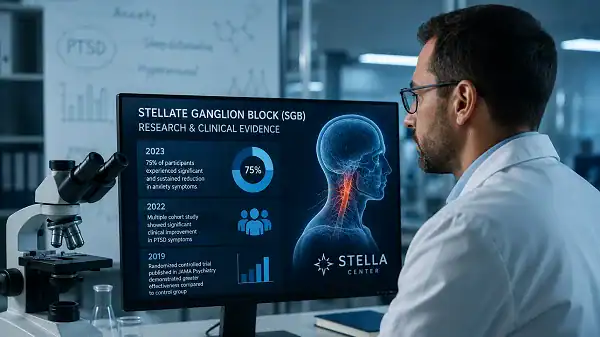
Sympathetic Nerve Block (SGB - Stellate Ganglion Block)
First, it is worth noting that this is a recognized and safe medical treatment, supported by clinical studies, consisting of two targeted injections into a very specific area of the neck, under ultrasound guidance, which act on the sympathetic nervous system. The treatment helps rebalance an overactive nervous system, thereby reducing symptoms such as hyperarousal, anxiety, flashbacks and insomnia. It is important to stress that PTSD is a complex disorder, and the road to recovery usually combines different approaches. SGB is an important tool that significantly helps relieve the physiological symptoms, but for the best and most lasting results, it is recommended to combine it with psychological therapy or other supportive treatments tailored to the individual.
Trauma creates a state of hyperarousal in the brain’s “fight or flight” response, triggering physical symptoms that disrupt quality of life and make it harder to progress in therapy. At Stella Israel, we perform a short medical procedure after which you may feel significant relief from the physical symptoms, relief that gives you a break from constant stress and helps you stay with and make progress in other treatments.
Benefits of the Treatment:
- A relatively short, safe procedure with no need for hospitalization.
- Rapid effect, sometimes within a few days.
- Noticeable results that last for months and even years.
- Can be effectively combined with emotional, psychological or psychiatric treatment, as needed.
In Israel, this treatment is performed by senior physicians experienced in treating people with PTSD, and it is tailored to each patient.
Watch Dr. Jason Cohen, Pain and Anesthesia Specialist, and Jason Blankfield, CEO of Stella Israel, on Channel 13
Rights and Benefits for People With PTSD: Soldiers, Reservists and Evacuees
People suffering from PTSD related to military service or national security events, including combat soldiers, reservists and civilians harmed in security incidents, may be eligible for official recognition and may receive assistance funding SGB treatment, sometimes with significant subsidies through the relevant authorities. To find out about your personal eligibility and suitability for treatment, contact Stella Israel and fill out a treatment suitability questionnaire.
Whatever caused your PTSD or your loved one’s, there is a way out and a way to recover.
The innovative treatment at Stella Center Israel, with a proven medical approach, a first-rate professional team and personal care, offers real hope and an important treatment option for people living with PTSD.
Interested in treatment for yourself or a loved one?
Request a callback or call now
Interested in treatment for yourself or a loved one?
Request a callback or call us