

Many people describe a constant sense of alertness, tension or restlessness, even when there is no real danger around them. They find it hard to relax, are easily startled by sudden noises, struggle to concentrate or experience sleep problems over long periods. Sometimes they know rationally that they are completely safe, yet the body keeps behaving as if it were under threat.
In many cases, this is a phenomenon known as hyperarousal, a state in which the nervous system is on a higher level of alert than usual.

Hyperarousal is one of the best-known symptoms in mental health and trauma care, but it is important to understand that it does not necessarily indicate PTSD or an anxiety disorder. It is a complex physiological response that can appear in a range of situations and significantly affect quality of life.
What Is Hyperarousal? A Definition
Hyperarousal is a state in which the body and brain act as if there is a danger that requires constant vigilance, even when the surroundings are in fact completely safe.
Our nervous system is naturally designed to detect threats and prepare the body to deal with them. When we face danger, the body activates a survival mechanism that includes releasing stress hormones, raising the heart rate, sharpening alertness and heightening our watchfulness toward the environment.
Normally, once the threat passes, the body gradually returns to balance. In some people, however, this mechanism stays active over time, even when the danger no longer exists. The result is an ongoing sense of arousal that can become part of everyday life.
What Does Hyperarousal Feel Like?
Hyperarousal can show up in different ways, and sometimes people do not connect what they are feeling with heightened nervous system activity at all.
Common symptoms include:
- Constant alertness.
- Difficulty relaxing or “switching off your mind.”
- Sensitivity to sudden noises.
- An exaggerated startle response to things in the environment.
- Trouble sleeping or waking up many times during the night.
- A feeling of physical tension.
- Irritability or impatience.
- Difficulty concentrating.
- A feeling that something bad is about to happen, even without a clear reason.
- Ongoing fatigue despite getting enough hours of sleep.
People sometimes describe it as feeling permanently “on standby,” “on operational alert” or “on your marks.”
Why and When Does Hyperarousal Happen?
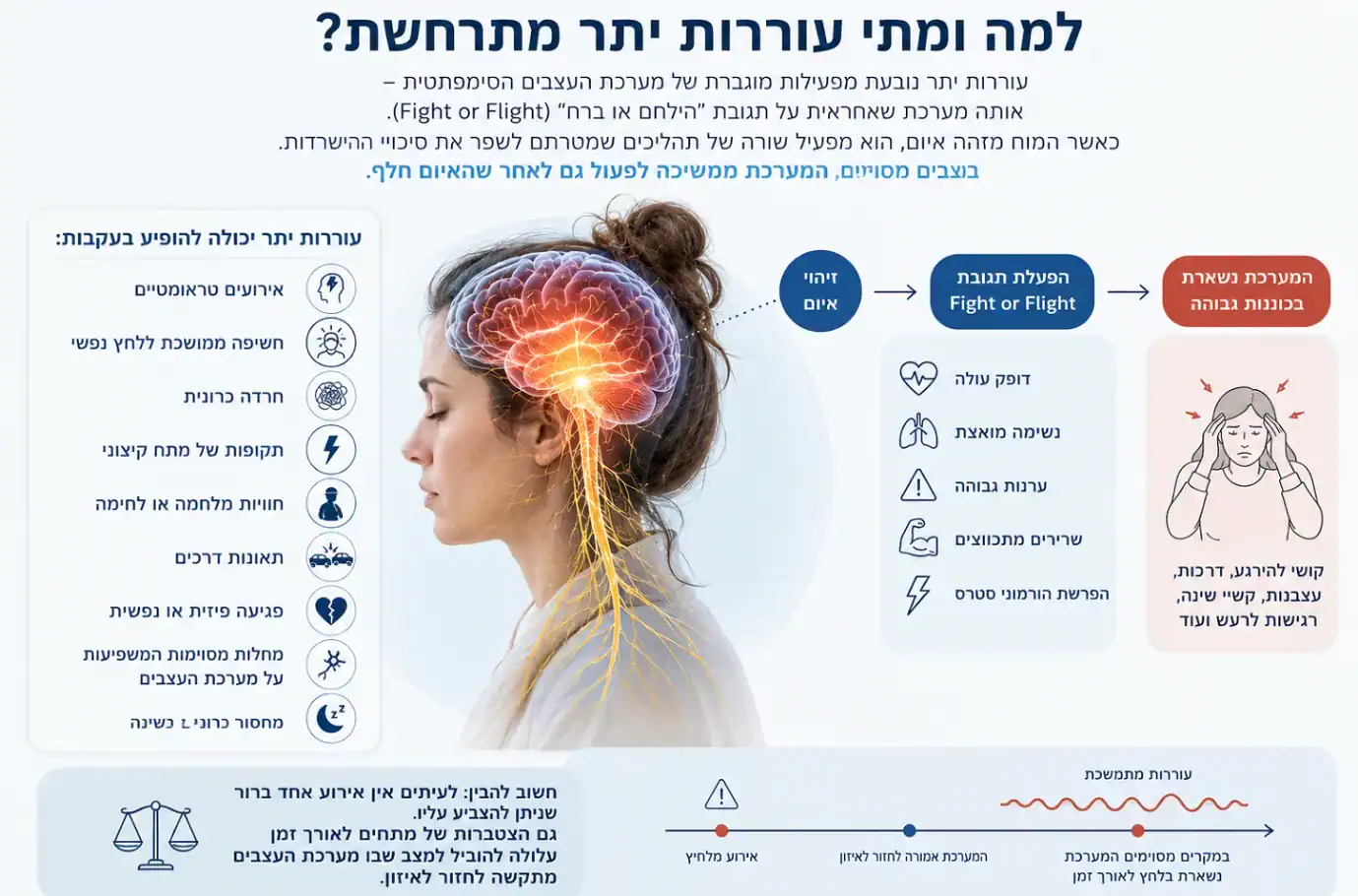
The main cause of hyperarousal is heightened activity of the sympathetic nervous system, the part of the nervous system responsible for the “fight or flight” response.
When the brain detects a threat, it triggers a series of processes designed to improve the chances of survival. In certain situations, the system keeps running even after the threat has passed.
Hyperarousal can appear following:
- Traumatic events.
- Prolonged exposure to psychological stress.
- Chronic anxiety.
- Periods of extreme tension.
- Experiences of war or combat.
- Car accidents.
- Physical or emotional harm.
- Certain illnesses that affect the nervous system.
- Chronic sleep deprivation.
It is important to understand that sometimes there is no single, clear event you can point to. Stress that builds up over time can also lead to a state in which the nervous system struggles to return to balance.
Does Hyperarousal Always Mean Anxiety?
Simply put, no.
Although hyperarousal is very common among people with anxiety disorders, it is not a diagnosis in itself and does not necessarily indicate clinical anxiety.
Sometimes it is a temporary reaction to a period of significant stress, a life change, emotional overload or a stressful event. In other cases, hyperarousal may be part of a variety of different medical or mental health conditions.
When symptoms persist over time, interfere with daily functioning or come with significant distress, it is advisable to see a professional for a comprehensive evaluation.
Is Hyperarousal Related to Post-Traumatic Stress Disorder (PTSD)?
Hyperarousal is considered one of the core symptoms of post-traumatic stress disorder (PTSD).
People living with PTSD may feel a persistent sense of danger even when they are in a completely safe environment. The brain and nervous system keep acting as if the threat still exists, and as a result, symptoms such as heightened vigilance, a strong startle response, sleep problems, irritability and difficulty relaxing appear.
In practice, many people with PTSD say they know they are safe, yet their body keeps reacting as if the danger were still around them.
That said, it is important to stress that not everyone who experiences hyperarousal has PTSD, and not every case of hyperarousal points to PTSD.
A PTSD diagnosis is based on a broad set of symptoms and professional criteria, not on a single symptom.
Can Children Experience Hyperarousal?
Absolutely.
Children and teens may develop hyperarousal following stressful events, frightening experiences, exposure to traumatic events or long periods of uncertainty.
In children, the symptoms may look somewhat different than in adults.
Possible signs include:
- Difficulty falling asleep.
- Nightmares.
- Increased fears.
- Clinging to parents.
- Irritability or angry outbursts.
- Sensitivity to noise.
- Difficulty concentrating at school.
- Physical complaints with no clear medical cause.
Children are sometimes unable to put into words the sense of alertness they are experiencing, so it is important to pay attention to changes in their behavior, mood and daily routine.

How Can You Cope With Hyperarousal?
How to cope depends on the factors that led to the symptoms and on how much they affect daily functioning.
Keeping a Sleep Routine
Lack of sleep can worsen hyperarousal and create an ongoing cycle of fatigue and alertness. A regular sleep routine can help reduce the load on the nervous system.
Physical Activity
Regular physical activity helps regulate stress hormones and contributes to reducing mental and physical tension.
Relaxation Techniques
Breathing exercises, meditation, mindfulness and muscle relaxation exercises may help lower the body’s level of arousal.
Emotional Therapy
When hyperarousal is related to trauma, anxiety or significant psychological stress, professional treatment may help identify its causes and develop coping tools.
Medical Evaluation
When symptoms persist over time or affect quality of life, it is important to have a professional evaluation that can help clarify the source of the problem and tailor the right treatment.
When Hyperarousal Is Related to Trauma and PTSD
For some people, hyperarousal does not stem only from temporary stress or a busy period, but is linked to long-term changes in the way the nervous system responds to threat.
In post-traumatic stress disorder (PTSD), the brain and nervous system may keep acting as if the danger still exists, even months or years after the traumatic event. As a result, many people report constant alertness, an exaggerated startle response, sleep problems, irritability and a feeling that they can never truly relax.
In these cases, coping does not focus only on the emotional aspects of the trauma, but also on the physiological mechanisms that drive the body’s stress response.
How Might SGB Treatment Help?
SGB (Stellate Ganglion Block) is a medical procedure that targets the sympathetic nervous system, the same system responsible for the “fight or flight” response.
During the treatment, a small amount of local anesthetic is injected near a cluster of nerves called the stellate ganglion, located in the neck. The goal of the treatment is to affect the overactivity of the sympathetic nervous system and help reduce the persistent state of alert that some people with PTSD live in.
In recent years, medical and research interest in this treatment has been growing, especially among people dealing with symptoms such as:
- Hyperarousal.
- Constant alertness.
- An exaggerated startle response.
- Sleep disturbances.
- Ongoing physical tension.
- A sense of restlessness that does not go away.
It is important to note that SGB is not intended for everyone who experiences hyperarousal, and suitability for treatment is determined after a professional medical evaluation, based on each patient’s personal situation.

Stella Center Israel: An Approach That Combines Body and Mind
At Stella Center, we focus on understanding the connection between trauma, the nervous system and the physiological effects of PTSD.
The center works from the understanding that for many people with PTSD, symptoms are not expressed only through memories, thoughts or emotional difficulties, but also through heightened, ongoing activity of the nervous system. In other words, the body sometimes continues to live in survival mode even after the danger has passed.
For this reason, alongside the importance of psychological treatment and emotional support, there are also medical solutions that target the physiological mechanisms associated with trauma and hyperarousal.
This approach makes it possible to assess the patient’s condition in a broader, more comprehensive way, addressing both the psychological and the physical aspects of trauma.
When symptoms persist over time and harm quality of life, it is important to understand that this is not just “sensitivity” or “trouble relaxing.” Sometimes the nervous system itself is in a prolonged state of alert, so a professional diagnosis and a look at suitable treatment options can be a meaningful step toward feeling better and improving quality of life.
We at Stella Israel are here for you with any question.
Leave your details for a callback or call 073-332-9259
Interested in treatment for yourself or a loved one?
Leave your details for a callback or call us